
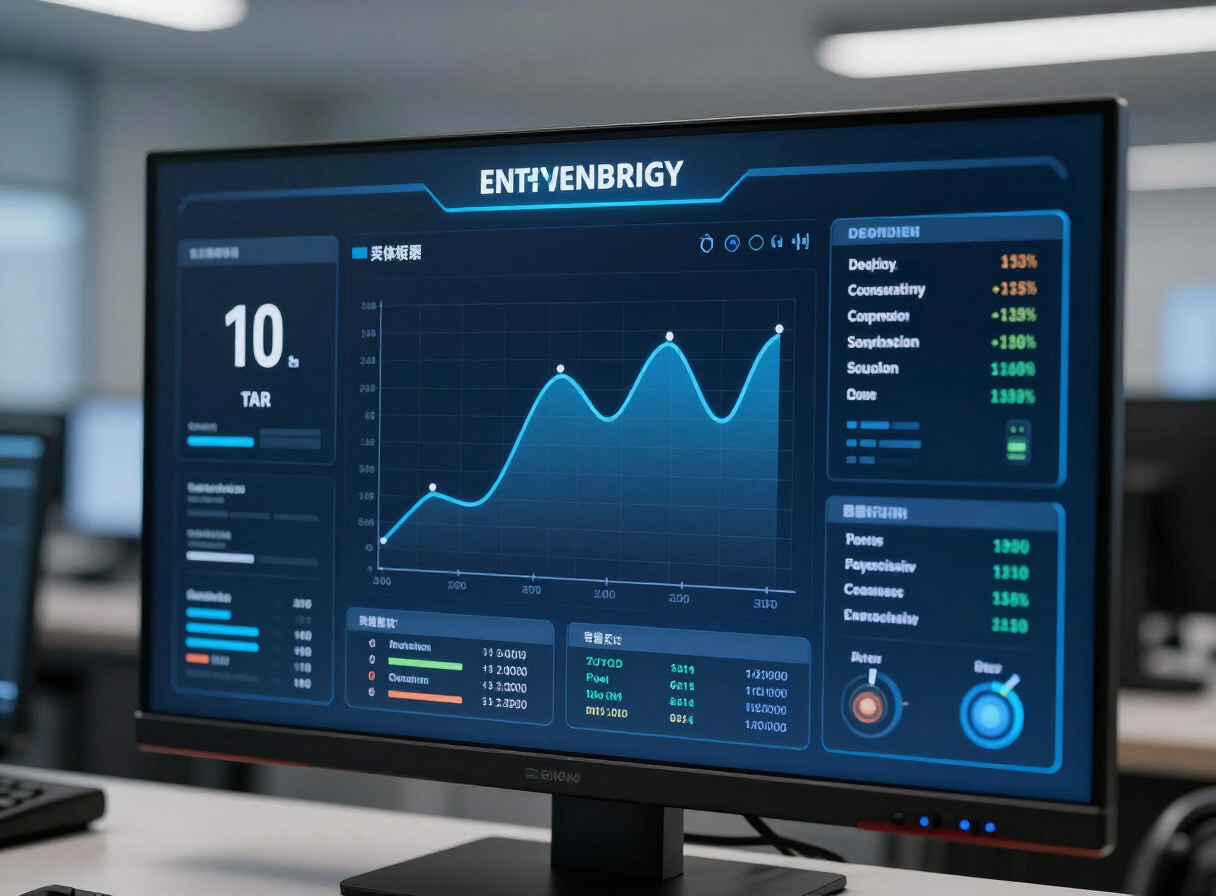
Industrial AI is the application of machine learning and statistical models to the data produced by industrial equipment, energy meters and process sensors. Unlike generic AI, it is trained on operational technology (OT) data and tuned to the physics of plant, buildings and machinery. The goal is narrow and practical: predict failures before they happen, cut energy waste, and turn continuous measurement into continuous improvement.
A working definition
Industrial AI is any model that learns patterns from industrial data — vibration, temperature, power draw, flow, throughput — and uses them to forecast, classify or optimise. It sits on top of an IIoT data foundation: without granular, reliable sensor data, there is nothing for a model to learn from.
The most valuable models are unglamorous. A regression that predicts a chiller's energy use from ambient temperature, or a classifier that flags an abnormal motor current signature, will out-perform a general-purpose model that has never seen your plant.
Where it delivers ROI
Four use cases account for most enterprise value: predictive maintenance (avoiding unplanned downtime), energy optimisation (matching consumption to demand), anomaly detection (catching leaks, faults and drift early), and forecasting (planning load, procurement and staffing). Each is measurable, and each builds on the same monitoring infrastructure.
What you need before you start
Industrial AI fails when it is bolted onto poor data. Start with dense, accurate sub-metering and a single source of truth for time-series data. Establish a baseline. Then apply models where the cost of being wrong — a failed motor, a wasted megawatt — is high enough to justify the effort.
Frequently asked questions
- How is Industrial AI different from general AI?
- Industrial AI is trained specifically on operational technology data — sensor readings, energy meters and machine telemetry — and is tuned to physical processes. General AI models are not aware of the constraints of plant and machinery, so they tend to produce plausible but operationally useless outputs.
- How quickly can Industrial AI pay back?
- When applied to high-value problems such as predictive maintenance or energy optimisation on continuously running equipment, enterprises commonly see payback within 6 to 18 months, driven by avoided downtime and reduced energy waste.
- Do I need clean data before using Industrial AI?
- Yes. Industrial AI depends on a reliable IIoT data foundation. Dense, accurate and well-timestamped sensor data is the single biggest predictor of whether a model will deliver value.

Put these ideas to work
Request an infrastructure audit and we will design a monitoring programme built around your estate and objectives.
Choose how you would like to engage our team.
Every route below reaches our UK and EU enterprise engineers directly. Pick the one that fits where you are — no obligation, response within one working day.
Common questions
An engineer reviews your metering estate and site plans, then returns a scoped monitoring proposal — typically within one working day of the initial call. There is no cost or obligation.
Send an enquiry
Tell us about your estate and we will route you to the right engineer.