
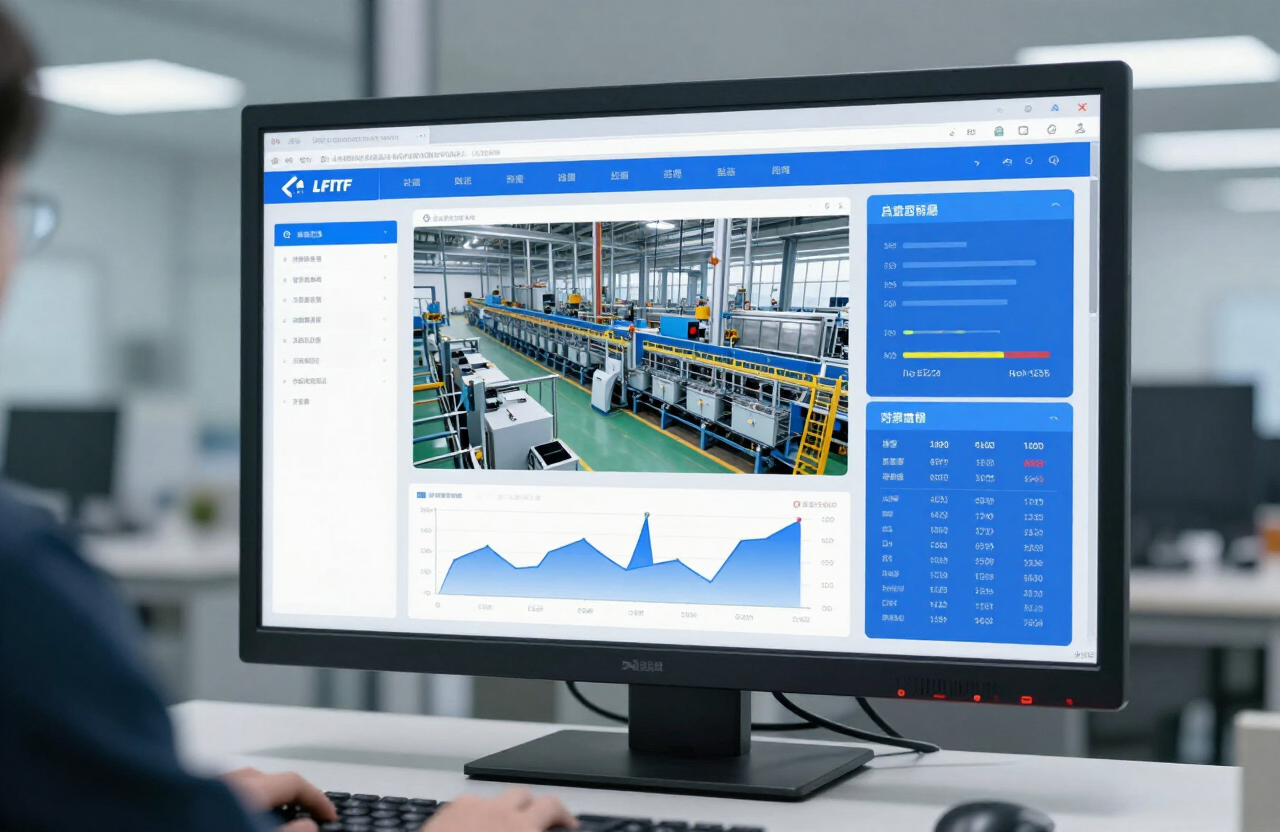
Industrial AI, without the data science team.
Machine learning models that learn what "normal" looks like for every asset on your estate, then flag deviations long before they become a problem.
Industrial AI here means letting the platform learn the normal pattern of a machine or process automatically — its usual energy use at 3am on a Tuesday, say — so it can flag anything unusual without a human having to set a manual threshold for every single asset.
Manually setting alert thresholds for thousands of sensors does not scale. Our platform applies machine learning to build a behavioural baseline for every asset automatically, then continuously compares live readings against that baseline to catch problems early.
Key benefits
- No manual threshold-setting across thousands of sensors
- Fewer false alarms than fixed-threshold alerting
- Early warning of equipment degradation
- Forecasts that support capacity and maintenance planning
A simple diagram of the data path.
How the platform learns and flags anomalies.
Historical data
Weeks of readings establish a normal pattern per asset
Baseline model
Machine learning builds an expected range for every hour and condition
Live comparison
Every new reading is checked against the model in real time
Alert & forecast
Deviations are flagged instantly; future demand is forecast from trends
Anomaly detection that adapts
A fixed threshold cannot account for seasonality, production schedules or shift patterns. A learned baseline adapts to all three, cutting false alarms while still catching genuine problems.
Per-asset baselines
Every machine gets its own model of "normal", not a one-size-fits-all threshold.
Early failure detection
Subtle drifts that precede equipment failure are flagged well before a breakdown.
Forecasting, not just monitoring
The same models that detect anomalies can project forward, helping teams anticipate demand, capacity charges and maintenance windows.
Demand forecasting
Anticipate peak demand periods before they trigger capacity penalties.
Predictive maintenance signals
Feed anomaly trends into maintenance planning rather than reacting to failures.
Common questions
Still unsure? Our engineers are happy to talk through the detail for your estate.
All FAQsDo we need a data science team to use this?
No. The models are built and maintained automatically as part of the platform.
How much history is needed before it works?
Meaningful baselines typically form within a few weeks of live monitoring, improving continuously after that.
Can it be wrong?
Like any model, it can occasionally misjudge unusual but legitimate events; alerts are designed to be reviewed by your team, not to act autonomously.
Explore what connects to this.
Ready to make your estate measure itself?
Request an infrastructure audit and we will design a LoRaWAN energy-monitoring programme built for ISO 50001 readiness across the UK and Europe.
Choose how you would like to engage our team.
Every route below reaches our UK and EU enterprise engineers directly. Pick the one that fits where you are — no obligation, response within one working day.
Common questions
An engineer reviews your metering estate and site plans, then returns a scoped monitoring proposal — typically within one working day of the initial call. There is no cost or obligation.
Send an enquiry
Tell us about your estate and we will route you to the right engineer.